




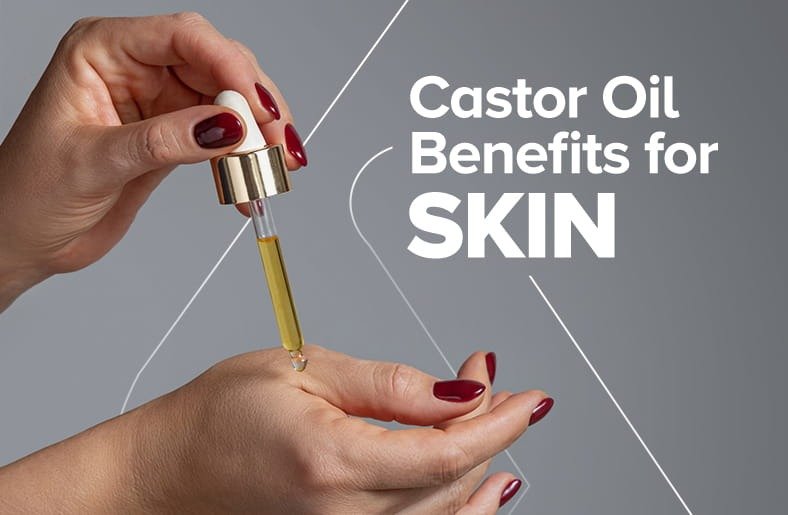
As skincare consumers become increasingly ingredient-conscious, the focus has now moved from flashy claims towards functional formulation science. Previously, oils were seen as simple moisturizers, but are now evaluated on their fatty acid profile, absorption rate, stability, and compatibility with other actives. Castor oil is one such ingredient – extremely versatile yet often misinterpreted.
Whether you are a skincare brand owner, cosmetic formulator, or buyer, anywhere in the world, you are probably seeking answers on the benefits of castor oil on skin, performance with other oils, and how it may fit into the current clean-beauty formulas. This blog explores exactly that. Let’s see how.
What is Castor Oil? A Functional Overview
Castor oil is a vegetable oil extracted from the seeds of the Ricinus communis plant. Although a lot of plant oils contain a similar fatty acid composition, castor oil is not the same. It is almost 90 percent ricinoleic acid, a hydroxylated fatty acid that is not commonly present in other natural oils.
This unique molecular structure gives castor oil:
- High viscosity and density
- Natural humectant properties
- Excellent film-forming ability
- Strong oxidative stability
Formulation-wise, these properties make castor oil much more than a simple emollient. It is actively involved in the texture of the product, its stability, and its interaction with the skin.
Castor Oil Benefits for Skin
The increase in the use of castor oil in skincare is not just a tradition but is supported by quantifiable benefits. The most significant castor oil benefits for skin when properly applied in formulations are:
1. Excellent Moisture Retention
The hydroxyl group of ricinoleic acid attracts water in the environment, thereby enabling the skin to be hydrated for a long duration of time. That is why castor oil is specifically useful in reference to the products that are aimed at enhancing the dry or damaged skin barriers.
2. Skin Barrier Support
When used in moderation, castor oil creates a protective as well as breathable coating on the skin. This prevents the increase in trans-epidermal water loss (TEWL) without any pore suffocation.
3. Soothing and Calming Effects
Its emollient property helps reduce irritation and enhance skin comfort, making it a preferred ingredient in sensitive skin formulations across various castor oil applications in personal care & cosmetics.
4. Antimicrobial Action
Castor oil is also typically applied in acne-care and cleansing formulations. Castor oil helps maintain microbial balance, making it suitable for acne-prone skin, hence good for the skin.
5. Better Texture and Product Feel
Castor oil also increases the slip, gloss, and body of cosmetic products, and is therefore highly useful in lip products, balms, and facial oils.
Unique Insight: Castor oil slowly absorbs into the skin, not like fast-absorbing oils. That is why it is also used at night, as a barrier-repair oil, or in leave-on products, a formulation that requires a long period of time to work better.
Castor Oil vs Other Oils in Skincare
Comparing castor oil with other plant oils in skincare, formulators are not concerned with what is trending but rather how each oil performs in a product and on the skin itself. Key aspects include:
- Interaction with the Skin Barrier: The way in which a given oil supports or undermines the protective layer of skin.
- Moisture Retention: The duration of benefits to be experienced following application.
- Formulation Behavior: Mixes or replaces the feel of a formula?
Castor oil stands apart due to the high content of ricinoleic acid (approximately 90 percent) in it. It is a fatty acid that makes it a better humectant as well as an occlusive agent. This means it draws moisture and coats the skin with a protective layer.
- Thick texture and slow absorption: Ideal as far as repairing barriers and long-lasting hydration is concerned.
- Best in blends: Due to its viscosity, castor oil is best used in blends rather than lightweight standalone formulations. Formulators combine it with lighter oils instead to give it a light feel.
Other Oils for Different Formulations
Compared to the heavy texture of castor oil:
Coconut Oil
Thick and occlusive, which is excellent in sealing moisture, but has more chances of clogging pores, which is not favourable to the acne-prone or sensitive skin.
This is one of the reasons why many chemists limit its application in facial products.
Jojoba Oil
Very lightweight and quick to absorb. Very similar to human sebum that promotes easy penetration into the skin. It is not as good as castor oil in terms of moisture-locking.
Thus, Jojoba oil is a good option when it comes to fast absorption products and a light finish. But it is unable to offer the same depth of hydration or barrier properties that castor oil can.
Argan Oil
Beyond hydration, Argan oil has antioxidants and a buttery texture that is valued, and it absorbs quickly. Good as an elasticizer and finish, however, less humectant than castor oil.
Sweet Almond Oil
It is light and universal, provides temporary relief, and skin hydration. However, it does not always provide lasting hydration.
Market Insight: The castor oil market in the whole world is booming with a CAGR of 5.3% (2025 to 2033), particularly in the cosmetic sector, where its versatility in terms of functionality is the driving force of demand. Major players are manufacturers such as Ambuja Solvex, and the forecasts in the industry indicate that personal care applications have a bright future.
Core Lesson:
- Lighter oils enhance feel and penetration.
- The best oil to mix with castor oil for skin are jojoba, argan, sweet almond, and coconut.
- Castor oil is used to offer durability, structural integrity, as well as long performance in those areas where long-lasting hydration is an important consideration.
Is Castor Oil a Carrier Oil?
Castor oil can dissolve the essential oils and deliver actives to the skin, thus it can be regarded as a carrier oil. But its thickness and slow absorption make its use for this purpose rare.
Instead, castor oil is an oil that is best used as a carrier oil, where it:
- Increases the dissolution of oil-soluble actives
- Increases the adherence of oils to the skin
- Reduces the speed of evaporation, extending the active contact time
This renders castor oil especially effective in therapeutic skincare as well as cosmetical formulations.
Conclusion
Castor oil is not a mere ancient medicine, but it is a high-grade cosmetic component, whose formulation has been proven. A combination of its distinctive fatty acid composition, ability to retain moisture, and stability makes it an effective alternative that needs to be considered carefully in Castor Oil vs Other Oils in Skincare. When combined properly, it is an oil that is a smooth carrier and functional oil in product categories.
This is the reason why long-time manufacturers such as Ambuja Solvex are significant in assisting skincare brands. At Ambuja Solvex, we offer high-quality castor oil in consistent quantities and adjust it according to the modern usage in cosmetics.
| For more information, contact us now or visit our website. |
FAQs
1. What are the major skin benefits of castor oil?
Castor oil can be used to keep the skin hydrated, promote the skin barrier, and provide antimicrobial effects. This makes it suitable for both dry and acne-prone skin.
2. Is castor oil a carrier oil?
Yes, castor oil can serve as a carrier oil, but it is more effective when combined with other lighter oils due to its viscous nature.
3. What is the best oil to apply with the castor oil on the skin?
Depending on the skin type and the formulation needed, the most common oils are jojoba, sweet almond, sunflower, and argan oils.
4. What is the comparison of castor oil with other skincare oils?
In the Castor Oil vs Other Oils in Skincare, the castor oil is better than other oils because it is good at retaining moisture, stability, and also stays in contact with the skin.
Refresh Date: January 30, 2026