





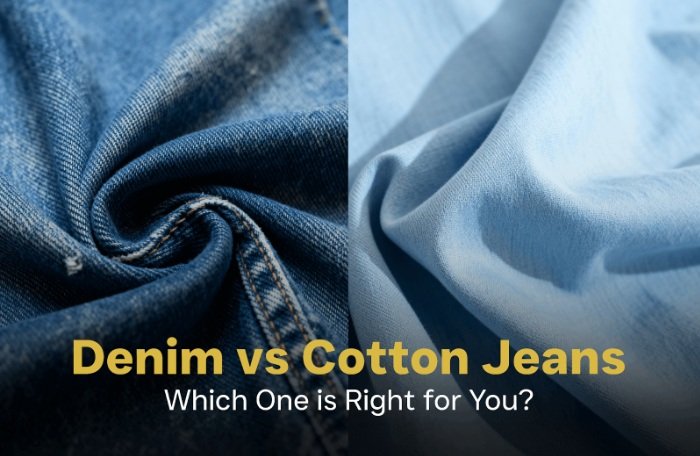
Jeans have become one of the trendiest wardrobe options across various age groups and cultures. From college to office goers, jeans adapt perfectly to suit the requirements. While buying a new pair, a question that strikes everyone is what to opt for: denim vs cotton. While in common understanding, both are often used interchangeably, they are far from similar. Clearly understanding what each has to offer would help customers make a smarter and more durable choice, which satisfies their expected utility.
Denim vs. Cotton Jeans – What’s Best for You?
This article explores the actual differences between denim and cotton jeans, focusing on different aspects like composition, manufacturing, styling, etc. By the end of the article, you will know what exactly suits your body and lifestyle.
What is Denim, and what is Cotton?
Cotton is a natural fibre which comes from the cotton plant. It is very soft, lightweight, and widely used in the clothing industry. One can find cotton cloth woven in different methods to produce shirts, dresses, trousers, as well as jeans. Denim, on the other hand, is not a fibre but a fabric. Denim fabric is made from cotton yarn. Denim is mostly blue due to specific dyeing. Thus, all denim is made of cotton; not all cotton fabrics are denim.
Manufacturing: How are they woven?
Cotton jeans are easier to make as the cotton fibres are spun into yarn, then woven into fabric, dyed if necessary, and then sewn into apparel. It requires relatively less use of water and fewer chemical treatments. Denim manufacturing is rather complicated. It involves rope dyeing using indigo, repeated washing, and often finishing treatments like stone washing or acid washing. These processes ensure the durability and premium texture of the clothes and are thus heavily invested in by a reputed denim clothing company. Due to this fact, denim jeans are usually costlier as compared to cotton jeans.
Fabric structure and feel
One of the most easily recognisable differences between denim and cotton is how each garment feels when it is worn. Cotton jeans are usually made from plain cotton or lightly woven cotton, which gives them a soft feel and a lighter texture. This makes them quite comfortable to wear in warm and humid weather.
Different kinds of denim fabrics
On the other hand, denim jeans are woven in a tight fit, giving them a weighty and fuller feel. There are different types of denim, like raw denim, stretch denim, stone wash denim, etc. In short, cotton jeans are ideal for those who value comfort more than style. On the other hand, denim jeans are more suitable for people who take structure and a neat fit seriously.
Durability
In terms of strength, denim is generally considered stronger than cotton. Blue jeans are famous for their strong nature and resistance to wear and tear. The weaving pattern makes them ideal for use, travelling, as well as rugged situations. They can withstand for several years if properly taken care of. Cotton jeans, though comfortable, are prone to early damage and destruction. They may fade out or become thin soon. Denim would prove to be a better investment if a person seeks value for the long term.
Suitability in terms of climate
Climate is a major factor to consider in making a decision whether to use denim material or cotton. Cotton jeans are the best for wearing in summer or where there is too much humidity. This is because they help keep the body cool, as they do not stick much to the body. When it comes to jeans, they are suitable in both hot and cool environments. In cooler climates, heavier jeans are preferred as they provide warmth and lighter jeans are preferred for moderate climates. However, for extremely hot conditions, heavier jeans feel restrictive and hence are not opted for by consumers.
Price and value for money
Cotton jeans are considered to be more affordable and are preferred more for everyday wear. Since they are not priced much, consumers feel free to experiment with different fits and trends without feeling a budgetary restriction. Denim jeans, on the contrary, are higher priced due to the material difference. Although the initial costs of purchase are high, they are better for long-term purposes. Thus, cotton jeans are a more budget-friendly option in the short term, while denim jeans provide durability and longevity for a longer time.
Denim and Cotton – The Value Difference
Ease of maintenance
Cotton jeans are easier to maintain. They only need machine washing, and they dry quickly. Denim jeans may require a little extra attention in their aftercare in order to maintain colour and shape. Over-washing can result in colour loss. That’s why denim gets washed less often.
Style and fit
Another important aspect of denim vs cotton is styling flexibility. Denim jeans come in a wide range of finishes. From raw and selvedge to distressed and stretch variants, the types of denim available today serve every fashion preference.
Cotton jeans usually offer a cleaner, simpler appearance. They are a great choice for minimalist wear and for semi-formal or office-friendly outfits. However, they provide fewer design variations compared to denim. A well-established denim clothing company often focuses on innovation in fits and finishes, which gives denim an edge in fashion-forward styling.
Conclusion
There is no overall winner in the denim vs cotton debate. Cotton jeans are the best option if one prefers light fabrics, lives in a hot climate, prefers minimalist designs, and is looking for an affordable option. Denim jeans are suitable if you value strength, style diversity, and value for money more in comparison. Knowing about your lifestyle, climate, and fashion requirements will also enable you to make an educated and confident decision, which goes beyond fashion trends.
The trend of clothing people want in the current times combines comfort along with the most chic style, and hence, they implement various creative ways to pair normal cotton pants with other fits that balance well. Thus, it is upon the person’s requirement or expectation that will make either denim or cotton a suitable fit for him/her.
Refresh Date: January 31, 2026