





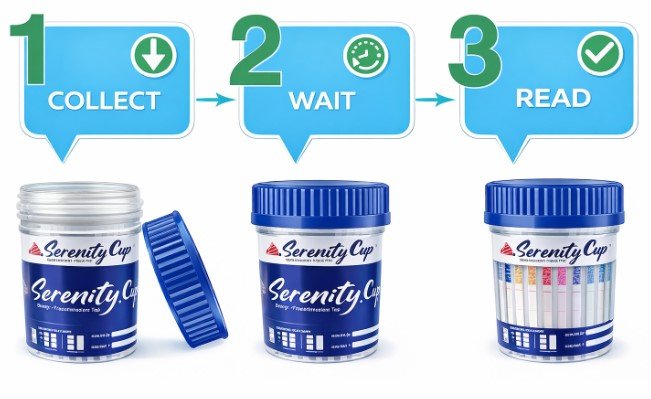
Drug tests for compliance, safety, and health programs are a core component of many organizational risk-management strategies. Drug test cups provide a reliable and easy-to-use option for these programs, helping reduce workplace accidents, protect customers and assets, and ensure employers meet legal and contractual obligations.
For online business owners, e-commerce teams, and agencies with distributed workforces, well-designed testing programs using convenient formats like drug test cups also preserve productivity and reputation without creating unnecessary legal exposure.
This article explains the types of tests, legal considerations, program design, implementation best practices, result management, and the technology and ROI considerations that decision-makers should weigh when building or updating a testing program.
Why Drug Testing Matters For Compliance, Safety, And Health Programs
Drug testing matters because it aligns an organization’s legal obligations with operational safety and workforce health objectives. Compliance-driven testing, required by federal contracts, transportation regulations, or insurance policies, protects the company from fines, contract loss, and liability. Safety-driven testing reduces the risk of accidents in roles where impairment has immediate physical consequences: warehouse operators, drivers, or employees working with heavy machinery. Health-oriented testing, often part of employee assistance programs (EAPs), aims to identify people who need support rather than punishment, improving retention and reducing the long-term costs of untreated substance use disorders.
For digital-first businesses, agencies, affiliates, and e-commerce teams, risks are more subtle but real: lapses in judgment while handling financial transactions, data breaches caused by impaired employees, or reputational damage from publicized incidents. A clear drug testing strategy signals commitment to clients and partners and can be written into service-level agreements (SLAs) or vendor contracts as a risk mitigant.
Eventually, a drug testing program becomes effective when it’s tailored to organizational goals, transparent to employees, and consistently applied across comparable roles. Otherwise it’s either a compliance checkbox or a morale problem.
Types Of Drug Tests And When To Use Them
Choosing the right test depends on objectives, detection window, invasiveness, speed, and cost. Below are common modalities and practical use cases.
Urine Testing: Pros, Cons, And Typical Use Cases
Urine testing is the most widely used workplace screening method. Pros include low cost, established lab workflows, and fairly wide detection windows for many drugs. It’s appropriate for pre-employment screening, random programs, and post-incident testing. Cons: urine tests typically detect recent use (days to a few weeks depending on substance and frequency), can be vulnerable to tampering if onsite collection protocols aren’t robust, and require privacy for collection. For many employers, urine panels hit the sweet spot of cost and reliability.
Hair, Saliva, And Blood Tests: Detection Windows And Applications
Hair testing offers long detection windows, weeks to months, making it useful where historical usage patterns matter, such as safety-sensitive contractors or forensic contexts. It’s more expensive and slower than urine testing. Saliva (oral fluid) tests detect very recent use, often within the prior 24–48 hours, so they’re used for reasonable suspicion, roadside checks, or onsite impairment assessments. Blood tests are the gold standard for detecting active impairment and precise quantification but are invasive and costly: they’re typically reserved for forensic cases, serious incident investigations, or where legal proof of impairment is required.
Point-Of-Care And Rapid Tests Versus Laboratory Confirmation
Point-of-care (POC) rapid tests deliver immediate results and are useful for screening during incidents or pre-shift checks. But, they have higher false-positive and false-negative rates compared with laboratory immunoassays and mass-spectrometry confirmatory tests. Best practice: use rapid tests for initial screening, and send presumptive positives to an accredited laboratory for confirmatory testing using GC-MS or LC-MS/MS methods.
Legal And Regulatory Considerations
Legal context shapes what an employer can do and how results must be handled. Understanding federal, state, and industry rules is essential to minimize legal exposure.
Federal And State Laws Affecting Workplace Drug Testing
Federal laws govern specific industries, DOT regulations for aviation, trucking, and pipelines: federal contractors often face additional requirements. Outside those domains, state laws vary widely: some states limit employers’ ability to test for off-duty marijuana use, while others require employers to engage in collective bargaining before implementing random testing. Employers must map federal mandates against state statutes in every jurisdiction they operate.
Privacy, Consent, And Reasonable Suspicion Standards
Consent and privacy requirements matter. Written policies and signed acknowledgments reduce disputes. Reasonable suspicion standards set thresholds for post-incident or targeted testing, supervisors should be trained to identify observable signs of impairment and follow documented decision trees. In many jurisdictions, surveillance or drug testing that’s overly broad can trigger privacy claims, so the program needs to be narrowly tailored and justified by business necessity.
Industry-Specific Requirements And Contractual Obligations
Some clients require vendors to enforce drug-free workplaces or to certify testing programs in contracts. Insurance carriers may offer premium credits for robust testing and EAPs. Agencies handling regulated client data, financial transactions, or physical logistics should explicitly reflect testing and screening expectations in vendor agreements to avoid downstream liability.
Designing An Effective Drug Testing Program
A written design process prevents ad-hoc decisions and ensures program defensibility.
Defining Objectives: Compliance, Safety, Or Health Promotion
Start by clarifying priorities. Is the program primarily to comply with a federal rule or contract? Is it aimed at preventing accidents? Or is the intent to promote employee wellness through voluntary screening and referral? Objectives determine test types, frequency, and the balance between enforcement and support.
Selecting Who To Test, When, And How Often
Risk-based approaches work best: prioritize safety-sensitive roles and client-facing staff, then expand selectively. Random testing deters use but must be statistically fair and well-documented. Post-incident testing should be triggered by objective criteria (accidents, rule violations). For remote or distributed teams, periodic screens tied to specific high-risk tasks or client contracts may be more appropriate than blanket policies.
Choosing Test Types, Cutoffs, And Confirmation Protocols
Decide which substances to include, standard 5-panel vs. extended panels, and set analytic cutoffs consistent with industry norms and medical review practices. Include mandatory confirmatory testing for all positives and define the chain-of-events for lab confirmation, medical review officer (MRO) notification, and employee communication.
Chain Of Custody, Documentation, And Recordkeeping Policies
Document every step: collection, transport, analysis, and results handling. Maintain secure records for the legally required retention period and ensure access controls. Proper chain of custody prevents challenges to test integrity and is essential when tests intersect with litigation or regulatory audits.
Implementation Best Practices
Execution is where programs succeed or fail. Attention to vendor selection, communication, and training reduces false positives and workplace friction.
Selecting Vendors And Labs: Accreditation And Quality Checks
Choose SAMHSA-certified labs or those accredited to ISO/IEC 17025 where applicable. Vet turnaround times, confirmatory processes, and data security practices. For remote collection, verify the vendor’s chain-of-custody solutions and mobile specimen collection procedures.
Training, Employee Communication, And Policy Transparency
Clear, accessible policies reduce misunderstandings. Train supervisors to document reasonable-suspicion observations and to follow protocols consistently. Communicate the program’s purpose, safety, compliance, or support, to build buy-in and reduce perceived stigma.
Integration With Safety Programs, Onboarding, And Incident Response
Embed testing into broader safety and onboarding workflows. New hires should receive policy disclosures during orientation: contractors and vendors should have documented compliance checks before site access. After incidents, follow a scripted response plan: secure the scene, document, collect specimens if indicated, and initiate support/referral pathways for affected employees.
Interpreting Results And Managing Positive Findings
A fair, consistent response framework preserves legal defensibility and employee dignity.
Confirmatory Testing And Avoiding False Positives
Rapid tests require confirmation. Medical Review Officers play a pivotal role: they evaluate potential legitimate explanations (medications, medical conditions) and review chain-of-custody issues. Confirmatory testing with mass spectrometry minimizes false positives and is a standard expectation in defensible programs.
Responding To Positive Tests: Discipline, Accommodation, And Return‑To‑Work
Responses should align with the program’s objectives. Safety-first policies may allow for removal from safety-sensitive duties pending evaluation. Health-focused programs often pair positive tests with mandatory assessment and documented treatment plans rather than immediate termination. Employers must also consider reasonable accommodation obligations under disability laws when substance use is tied to a diagnosed medical condition and comply with collective bargaining agreements where relevant.
Support Pathways: Employee Assistance Programs, Treatment, And Monitoring
Well-designed programs couple testing with support: confidential EAP referrals, structured treatment plans, and return-to-work monitoring (e.g., follow-up tests, supervised programs). These pathways reduce recidivism and cost compared with punitive-only approaches.
Technology, Cost, And ROI Considerations
Understanding costs and technological options helps align spending with expected benefits.
Comparing Costs: Onsite Rapid Testing Versus Laboratory Panels
Rapid onsite tests have lower per-test costs and immediate results but higher follow-up expenses due to confirmations and potential disputes. Lab panels cost more up front but provide stronger evidentiary value. For routine random testing, labs often deliver better long-term ROI by reducing false positives and litigation risk.
Emerging Technologies: Remote Collection, Digital Chain Of Custody, And AI Screening
Remote collection solutions, observed saliva collection via telemedicine, digital chain-of-custody platforms, and secure mobile photo ID, make testing feasible for distributed teams and contractors. AI-driven analytics can flag abnormal lab patterns or tampering attempts, but human oversight (MROs and trained supervisors) remains essential to interpret nuance and context.
Measuring Program Effectiveness And Calculating Return On Safety Investment
Measure outcomes: incident rates, workers’ comp claims, productivity metrics, and client complaints before and after implementation. Estimate ROI by comparing avoided costs (accidents, fines, lost contracts) and reduced turnover against program costs (tests, vendor fees, administrative overhead). For many organizations, modest testing programs plus EAPs deliver tangible improvements in safety and risk profile within 6–12 months.
Conclusion
Drug tests for compliance, safety, and health programs are more than regulatory checkboxes: they are tools for managing risk, protecting people, and preserving organizational reputation. The most effective programs are those that start with clear objectives, choose appropriate test types and vendors, document everything, and treat positive results as opportunities for safety interventions and support, not just discipline. For online businesses and agencies operating across jurisdictions, flexibility, combined with legal review, transparent policies, and modern remote-capable technologies, creates a defensible approach that protects both the workforce and the bottom line.
Refresh Date: February 26, 2026