





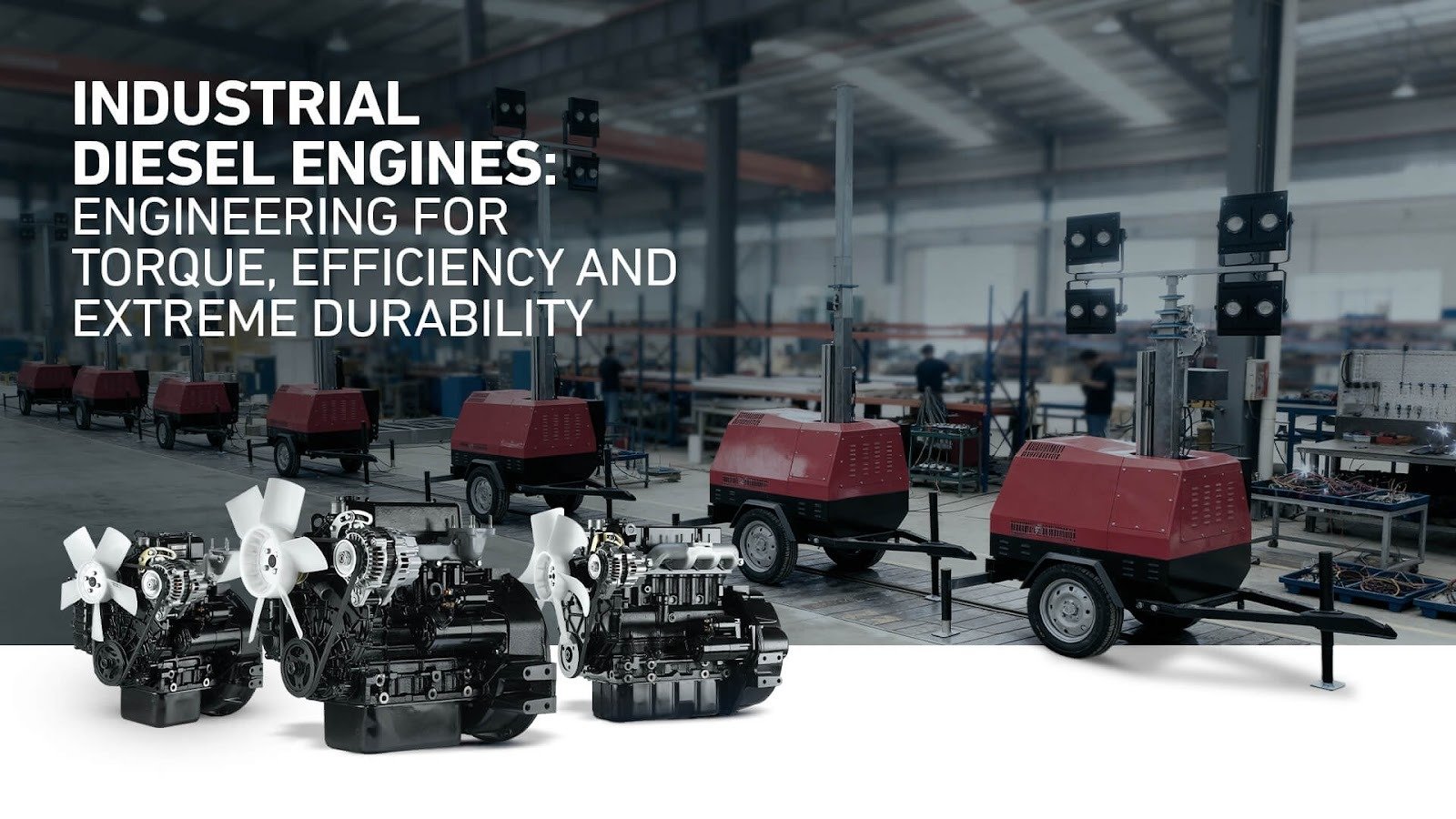
The diesel engine is the backbone of heavy industry worldwide. From the agricultural fields of the tropics to infrastructure projects in developing megacities, it remains the only prime mover capable of delivering the torque density required for heavy work. But this dominance isn’t just about the tradition alone. The physics behind it is even more interesting.
It relies on an interplay of high-pressure compression, precision fuel metering and robust structural engineering. For MVDE and procurement teams in the off-highway sector, understanding the mechanics of this machine is a financial imperative. Incorrect architecture choices inevitably lead to inflated fuel costs, operational downtime and premature equipment failure.
This guide outlines the conversion of chemical energy into mechanical force and the engineering required to sustain it under the harshest global operating conditions.
Compression Ignition: The Core Differentiator
The absence of a spark plug dictates every aspect of diesel architecture. Petrol engines mix air and fuel before the cylinder. They compress the charge at a ratio of roughly 14:1 or more before igniting it electrically.
Diesel engineering follows a distinct path. The intake draws only air. The piston compresses this air to extreme pressures, typically between 16:1 and 23:1. This massive reduction in volume forces molecules together. Internal temperatures spike beyond 500°C. At that precise thermal peak, the injector introduces fuel.
Ignition is instantaneous. This is called Compression Ignition.
The resulting internal pressures are extremely high. Because of this, diesel engine manufacturers cannot use the lightweight aluminium blocks found in passenger cars; they must use grey cast iron or compacted graphite iron (CGI). Pistons are heavier, and connecting rods are thicker. The trade-off is weight for durability. The electrical ignition system and its susceptibility to failure in damp or humid conditions are eliminated.
The 4-Stroke Cycle: Engineering for Torque
Most industrial diesel engines utilise a standard four-stroke cycle. However, the thermodynamic behaviour within a diesel cylinder is unique.
- Suction: The engine draws in fresh air. Unlike petrol variants that use a throttle plate to restrict airflow, a diesel engine breathes freely. The cylinder fills. This maintains high efficiency even at low loads.
- Compression: The piston drives upward. It tests the seal of the head gasket and rings. Any leakage here equates to heat loss. Without sufficient trapped heat, the air fails to reach auto-ignition temperature. This causes starting failures in cold climates.
- Power: Fuel injection triggers combustion. Crucially, diesel burns slower than petrol. The expanding gas exerts pressure on the piston for a longer duration of the downward stroke. This sustained pressure generates superior crankshaft torque.
- Exhaust: Burnt gases are expelled, and the cycle resets.
Fuel Injection: The Precision Game
While the engine block provides the physical foundation, the fuel injection system acts as the operational brain. Older mechanical pumps were simple but inefficient. Strict global emission norms (like Stage V or TREM IV) have forced diesel engine suppliers to evolve from simple mechanical pumps to advanced electronic systems known as Common Rail Direct Injection (CRDI).
The rail maintains fuel pressures exceeding 2,000 bar. Electronic injectors do not merely open. They execute multiple events per cycle. A precise ‘pilot’ injection warms the combustion chamber milliseconds before the main power injection. This staging creates an engine that runs quieter and delivers approximately 15% better fuel economy than mechanical predecessors.
3-Cylinder vs 4-Cylinder: Choosing the Right Configuration
Packaging constraints and balance requirements dictate the choice between cylinder layouts.
- The Inline-3 (Agriculture, 20-50HP) Compact dimensions suit tractor applications. Odd-numbered cylinders inherently generate a rocking couple but engineers neutralize this vibration with heavy counterweights. The primary benefit is frictional efficiency. Fewer pistons mean fewer rings generating drag against the liner.
- The Inline-4 (Construction, >50HP) For continuous duty cycles, smoothness is paramount. Firing every 180 degrees, the Inline-4 delivers seamless power without the rocking moment. This reduces stress on main bearings. It is the standard for backhoe loaders and power generation gensets running at full load.
The ‘Lugging’ Phenomenon
Field operators recognize ‘Lugging Power’. Engineers calculate Torque Reserve. When an implement hits high resistance such as hard soil, engine RPM naturally drops. In a petrol engine, torque would decay and lead to a stall. In a diesel engine, the governor responds to the RPM drop by increasing fuel delivery. Volumetric efficiency often improves simultaneously. Torque therefore rises as speed falls. This characteristic allows the engine to overcome variable resistance without stalling.
Thermal Management in Extreme Heat
With ambient temperatures in many operating regions frequently exceeding 45°C, thermal management is critical. The cooling system is a calibrated loop rather than a passive reservoir.
Coolant is routed through precision galleries in the cylinder head. These target the exhaust valve seats where heat flux is highest. Simultaneously, oil jets spray the underside of piston crowns. Without active oil cooling, thermal expansion would cause piston seizure within minutes of heavy operation.
For reputable diesel engine suppliers, the cooling package rating is a non-negotiable specification because an engine that overheats is an immediate liability.
The Verdict on Maintenance
Diesel engines are structurally robust but hydraulically sensitive. Modern injector tolerances are often sub-2 microns. For context, a human hair measures around 70 microns. Contaminated fuel acts as an abrasive and destroys high-pressure components. Filtration is not optional. Water separators are mandatory to prevent pump corrosion. Air hygiene is just as important. A ‘dusted’ engine where particulate matter breaches the intake will lose compression in under 50 hours of operation.
Engine Selection Strategy
The technology has advanced; diesel engine manufacturers have moved from noisy, mechanical units to precision-engineered power plants. For OEMs, the objective is integration. They must match cylinder configuration to the duty cycle and ensure thermal systems align with local climatic realities.
Selection is a calculation of Lifecycle Cost (LCC). This balances acquisition price against fuel burn, maintenance intervals and overhaul limits. It is this mastery of combustion dynamics and durability that defines MVDE’s standing in the global market. In heavy-duty applications, efficiency and durability are not features. They are the baseline for survival.
Frequently Asked Questions
Q1: How many hours does an industrial diesel engine last?
Industrial diesel units from top manufacturers are engineered for 10,000–25,000 hours before overhaul, depending on maintenance. Unlike car engines, these engines feature heavy-duty cast iron blocks to withstand continuous load and fatigue, significantly extending their service life.
Q2: How does a CRDI system improve fuel efficiency?
CRDI enables fuel injection at over 2,000 bar and allows multiple injections per cycle, including a pilot shot. This precise metering ensures complete combustion, reduces waste and helps modern diesel engines from top suppliers consume about 15% less fuel than older mechanical pump engines.
Q3: What makes MVDE engines suitable for extreme climates?
Industrial engines, enduring ambient temperatures from freezing to over 45°C, are engineered by MVDE with active thermal management. Precision coolant galleries in the cylinder head and piston-cooling oil jets ensure peak performance and durability in extreme climates, such as Mumbai’s humidity or the African plains’ heat.
Refresh Date: January 30, 2026