



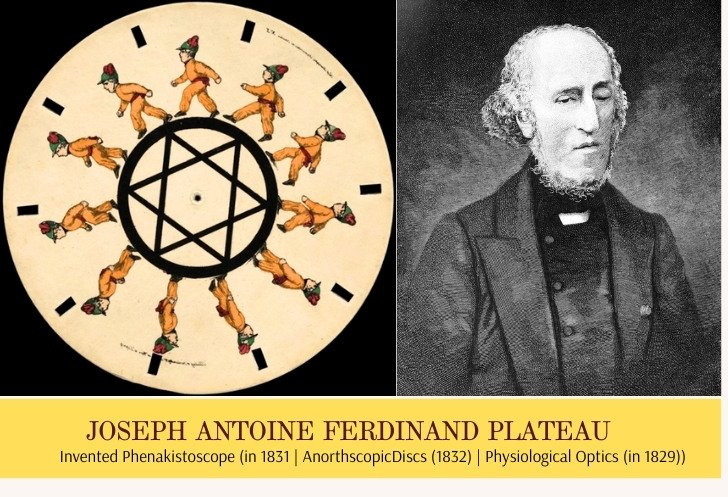
Joseph Antoine Ferdinand Plateau is the most crucial scientist of the 19th century. He is recognised for inventing the phenakistoscope, an early animation tool that laid the base for contemporary cinema.
Joseph Antoine work in physics, optics, and perception of visuals transformed how scientists understand human vision. He lost his eyesight completely, but continued his research and created a life story as motivating and historically important. Today, He is remembered for his scientific concepts that are widely studied in physics and mathematics.
In this blog, we will get to know about the life journey of Joseph Antoine Ferdinand Plateau, Inventions, cause of death and Journey.
Joseph Antoine Ferdinand Plateau: Biography
| Attribute | Details |
| Name | Joseph Antoine Ferdinand Plateau |
| Date of Birth | 14 October 1801 |
| Place of Birth | Brussels, Belgium |
| Profession | Physicist Mathematician Stamp designer |
| Age ( When He Died) | 81 Years |
| Death Year | 15 September 1883 |
| Achievements | Phenakistoscope (in 1831) Physiological Optics (in 1829) AnorthscopicDiscs (1832) Surface tension |
| Wife Name | Augustine Thérèse Aimée Fanny Clavareau |
| Nationality | Belgian |
Joseph Antoine was born on 14 October 1801 in Brussels at that time which was then part of the French Republic. His father’s name is Antoine Plateau, who was a painter and worked for the royal court. Joseph’s mother is Therese Eustache, who died when he was just 14 years old. His loss of his mother affected him badly.
Since childhood, Joseph has shown an interest in science and art. His father motivated him to discover both areas. The amalgamation of artistic imagination as well as scientific curiosity guided Antoine in knowing about visual perceptions better.
Educational Background
Antoine completed his graduation as a doctor of physics and mathematics in 1829 from the State University of Liege. Then, in the year 1827, Plateau became a teacher and taught mathematics at Atheneum School in Brussels. Later, in 1935, he was appointed as a professor of physics and applied physics at the State University located in Ghent. During his school years, Antoine developed a passion for how the human eye takes motion and light. This developed a curiosity and led to research in optical illusions as well as moving photos.
Joseph Antoine Ferdinand Plateau’s Scientific Experiments and Research
His early research interests were persistence of vision. It is the phenomenon where the human eye absorbs an image for a fraction of a second after it has disappeared. Joseph believes in the reason why quickly transforming visuals feature as continuous movement.
To get to know more deeply about the ideas, he did risky experiments on his own eyesight. He started looking directly at the sun for a long time to know how light impacts vision. But these risky experiments led to permanent damage to his eyes.
Joseph Plateau Phenakistoscope
In the year 1832, Joseph invented the Phenakistoscope, which is the first device to generate the illusion of motion visuals. The name originates from the Greek word meaning deceptive power. The phenakistoscope consists of a rotating disc, a series of visuals in a sequence, and a small number of slits around the edge. Whenever the disc revolves and is viewed via slits in a mirror, the visuals seem to move.
The phenakistoscope was important to him because it showed how moving images work. Later, it impacted his other inventions, such as the zoetrope and cinema projector. Also helps in understanding the perceptions of visuals. This invention is regarded as the contemporary animation and cinema.
Plateau’s Laws and Soap Film Experiments
Joseph has done extensive research on soap movies and their surface tension. His experiments led to the formation of Plateau’s Laws that discuss how soap film automatically shapes with less surface area. Plateau’s laws explore that Soap films shape smooth surfaces, three films meet at 120-degree angles, and 4 corners meet at one point. These were the observations and became the important principles in physics, geometry, and materials science.
Joseph Plateau Vessel
The Joseph Plateau vessel is a science-relatedof equipment utilized to plan the liquids in zero gravity surroundings. It is important in fluid and physics education. Sometimes the vessel also showcased how liquids shape spherical shapes, the effects of surface tension, and physical balance in the fluids.
Joseph Antoine’s Reason behind Loss of Sight
In the year 1843, Plateau became completely blind due to a risky experiment he applied to himself. But he did not give up on Science and continued his research and experiments. With the help of his wife, Augusta Clavareau also along with his students and assistants. Joseph continued his research via verbal explanations and mental visualization. His dedication is one of the most motivating stories in the history of science.
Teaching Career and Contributions
Joseph was a professor at the University of Ghent and taught experimental physics. After losing his eyesight, he stayed included in teaching as well as research. His lectures were recognized for being transparent, well-structured, and expert in understanding concepts. His students appreciated his ability to give an explanation of difficult ideas in simple and easy language.
Books & Publications
Joseph Plateau has published various impactful papers and books on optics and visual perception:
| Field | Contribution |
| Optics | Persistence of vision |
| Animation | Phenakistoscope |
| Physics | Plateau’s laws |
| Fluid dynamics | Joseph Plateau vessel |
| Vision science | Optical illusions |
Joseph Antoine’s Death Date, Age & Reason of Death
In the later years of his life, Plateau’s health stayed low, but his mind and intellect stayed sharp. He spent his last years working on science and checking young researchers. Joseph Antoine Ferdinand Plateau died on 15 September 1883 in Ghent, Belgium, at the age of 81 years old.
Impact on Modern Science
In today’s world, Joseph’s work is highly appreciated by the people. His work influenced:
- Animation and film
- Vision Science
- Physics and Maths
- Engineering and Materials Science
Timeline
| Year | Event |
| 1801 | Born in Brussels |
| 1829 | Research on visual perception |
| 1832 | Invented phenakistoscope |
| 1843 | Lost eyesight completely |
| 1850s | Published Plateau’s laws |
| 1883 | Passed away in Ghent |
Conclusion
Joseph Antoine was an inventor and a visionary scientist who reformed the understanding of concepts like motion, vision, and physical laws. From the invention Joseph Plateau phenakistoscope to the Joseph Plateau vessel his great contributions remain relevant for centuries. Due to complete blindness, he did not give up and continued his experiments and research.
FAQs:
A. Joseph Antoine father’s name is Antoine Plateau, born on 14 October 1801 in Tournai, and was a talented flower painter.
A. Joseph Antoine is regarded as the Father of Film.
A. Joseph invented the Phenakistoscope in 1832 to calculate human vision.
Refresh Date: January 14, 2026