



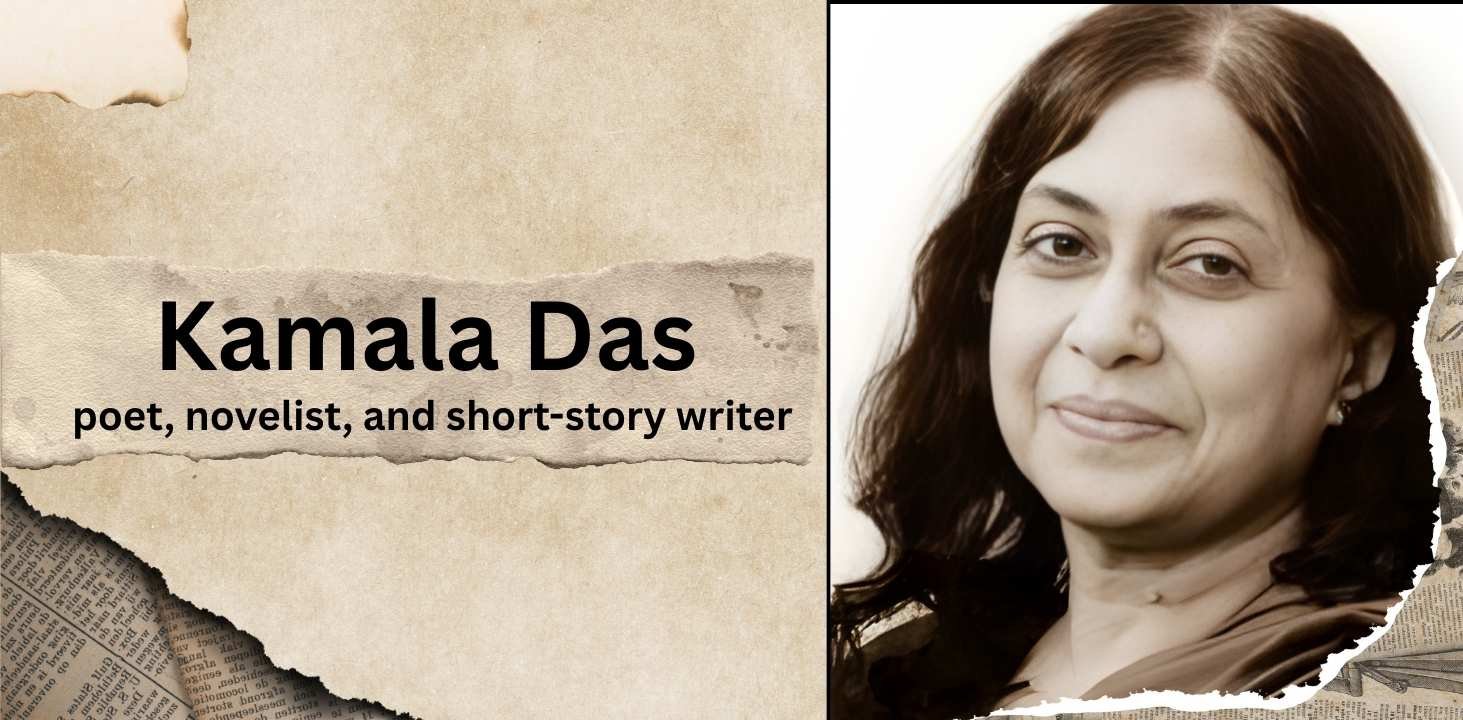
Kamala Das is one of the strongest and most honest voices in Indian English literature. He is recognised for her bold writing style and deepest emotional expression. She is hugely regarded as the explorer of contemporary Indian poetry. Through her writings, she gave voice to many women worldwide. Kamala’s work depicts her life, which makes her a relatable writer. In this blog, we will guide you through Kamala Das’ biography, personal life, books, famous works, father, and much more.
Kamala Das Biography
Kamala Das was India’s most popular voice in English Literature. She was a Kamala Das poet, writer, and memoirist who wrote about love, female, emotional clash, and life. Her work is still read by students, and she is the most loved poet by readers. Kamala was born on 31 March 1934 in Punnayurkulam, Thrissur District, Kerala. She was born as Kamala, and later, after her marriage, she changed her name to Kamala Das. Her pen name was Madhavikutty, and she wrote in genres like Poetry, novels, Short Story, and memoirs. Unfortunately, Kamala Das died at the age of 75 on 31 May 2009 in Pune, Maharashtra.
| Field | Details |
| Full Name | Kamala Surayya |
| After Marriage Name | Kamala Das |
| Born | 31 March 1934 |
| Birth Place | Punnayurkulam, Thrissur District, Kerala, India |
| Died | 31 May 2009 (aged 75) |
| Place of Death | Pune, Maharashtra, India |
| Resting Place | Palayam Juma Masjid, Thiruvananthapuram, India |
| Pen Name | Madhavikutty |
| Occupation | Poet, Novelist, Short Story Writer |
| Genre | Poetry, Novel, Short Story, Memoirs |
Kamala Das: Education and Early Life
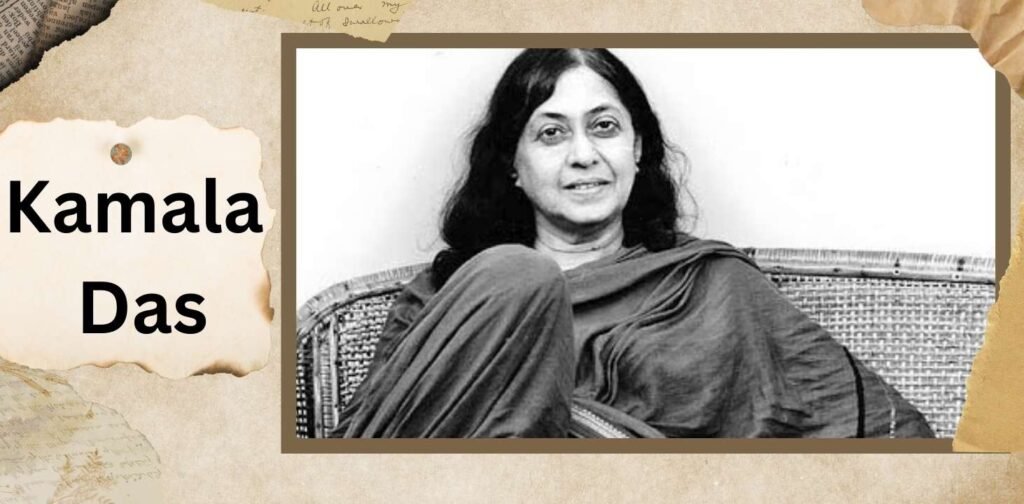
Kamala was born in a famous literary family, so from a young age, she had a keen interest in literature, poetry, and discussions. These played an important role in forming her future as a writer as well as a poet. Kamala did not receive any kind of formal higher education. But her foundational education took place in Kolkata and Kerala. She has completed her education at convent schools, but left her education at a young age. As we know, Kamala was very much interested in reading, so she developed skills by self learning and observations.
Surayya started writing poems as a teenager. Her early experiences, emotions, and early introduction to literature impacted her writing style a lot. The early years became the base of her poetry, where experiences, emotions, and conflicts became important for her. Kamala’s early life was shaped by the impact of her family.
Kamala Das Family
Kamala Das father name was V.M. Nair, who was a senior executive in a British Automobile company and also worked as the managing editor of a Malayalam newspaper. Her mother name was Nalapat Balamani Amma, who was a poet. Kamala has grown up in a poetry environment, and her early discovery of writing, reading, and poetic expression came from her family.
| Relation | Name |
| Father | V. M. Nair |
| Mother | Nalapat Balamani Amma (renowned Malayalam poet) |
| Husband | K. Madhav Das |
| Children | Madhav Das NalapatChinnen DasJayasurya Das |
Kamala Das Husband and Children
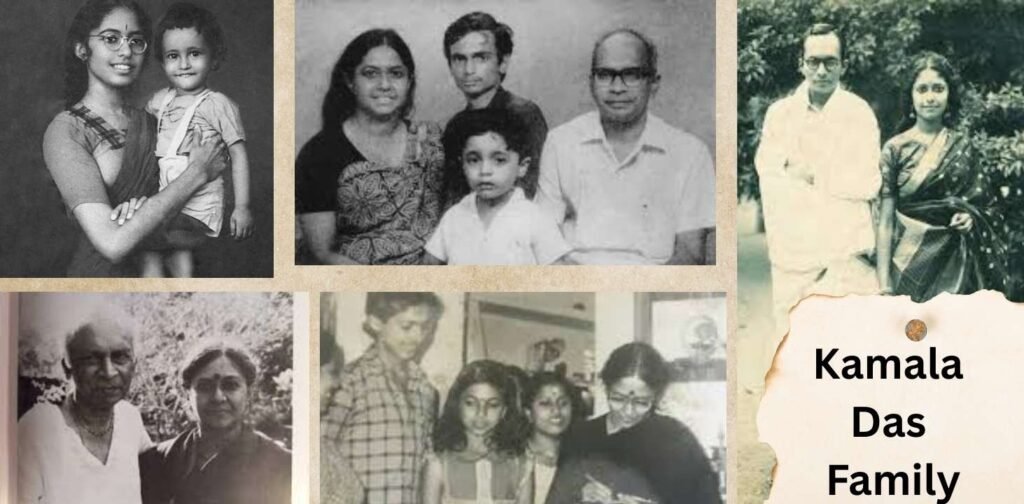
If we talk about her marriage, Kamala got married when she was just 15 years old. She was married to K.Madhav Das, who was a bank officer. After marriage, Kamala changed her name to Kamala Das and became a writer and poet. After 43 years of marriage, her husband died in 1992. The marriage had a huge impact on her personal life as well as her writing. Many famous works reflect her personal experiences in a marriage that is full of emotions, loneliness, love, and finding freedom.
After the marriage, Kamala had three sons named Madhav Das Nalapat. He got married to Princess Thiruvathira Thirunal Lakshmi Bayi, who belongs to the Travancore Royal House. Currently, Madhav is a professor at Manipal University in Geopolitics and holds the UNESCO Peace Chair. He has also been the editor of The Times of India. Her other two sons are named Chinnen Das and Jayasurya Das. Her character as a wife and mother has involved a lot of emotional struggles and accountability.
Kamala Das: Career and Writing Style
Kamala began writing poems as a teenager and later became an important personality in Indian English Literature in the 1960s and 1970s. Her pen name was Madhavikutty. Her literary work mainly emphasizes women’s feelings, emotions, dreams, identity, freedom, struggle, and betrayal. At that time, they were regarded as a controversial theme.
Later, she became a Confessional poet and writer who openly talks about experiences and emotions mindfully. Her style was easy, direct, but full of emotion. Her writing style was very different from traditional poetry.
The themes of Kamala Das’s poems were:
- Love
- Female Identity
- Freedom
- Marriage and Relationships
- Pain
- Betrayal
- Emotional Honesty
Kamala Das Books and Famous Works
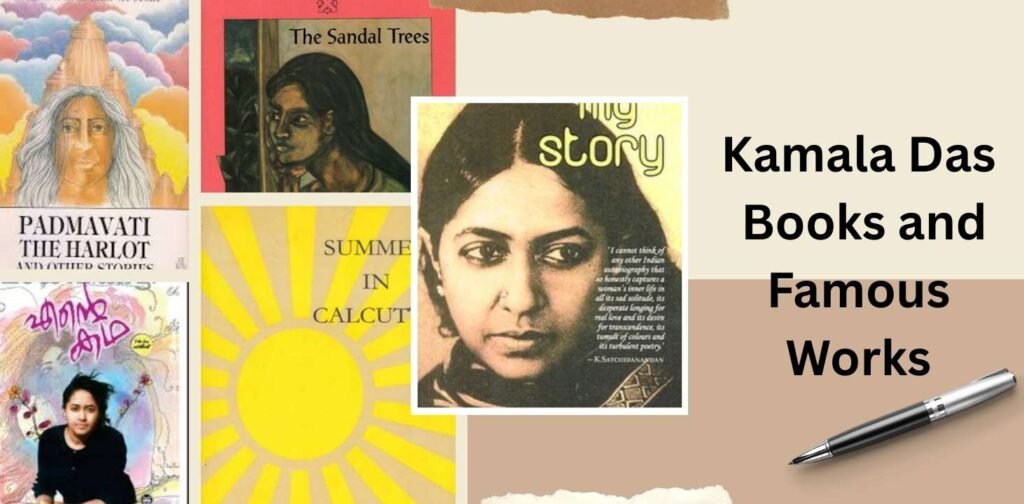
| Category | Book Title | Year |
| Poetry (English) | Summer in Calcutta | 1965 |
| The Descendants | 1967 | |
| The Old Playhouse and Other Poems | 1973 | |
| Only the Soul Knows How to Sing | 1996 | |
| Autobiography | Ente Katha | 1973 |
| My Story | 1976 | |
| Short Stories | Padmavati the Harlot and Other Stories | 1992 |
| Novel (English) | Alphabet of Lust | 1976 |
| Malayalam Works | Thanuppu | 1967 |
| Balyakala Smaranakal | 1987 |
Kamala Das Poems
| Poem Title | Year / Collection | Theme |
| An Introduction | Summer in Calcutta (1965) | Identity, womanhood, self-expression |
| The Old Playhouse | The Old Playhouse and Other Poems (1973) | Marriage, loss of self |
| My Grandmother’s House | Summer in Calcutta (1965) | Childhood, love, longing |
| A Hot Noon in Malabar | Summer in Calcutta (1965) | Sensuality, memory, place |
| The Sunshine Cat | The Descendants (1967) | Female suffering, oppression |
| The Looking Glass | The Descendants (1967) | Love, desire, gender roles |
| The Freaks | The Descendants (1967) | Emotional emptiness in relationships |
| The Stone Age | The Descendants (1967) | Marriage, domination |
| Gino | The Descendants (1967) | Love and emotional attachment |
| My Mother at Sixty-Six | Later Poems | Ageing, loss, mother-daughter bond |
Entry into Politics: Kamala Das
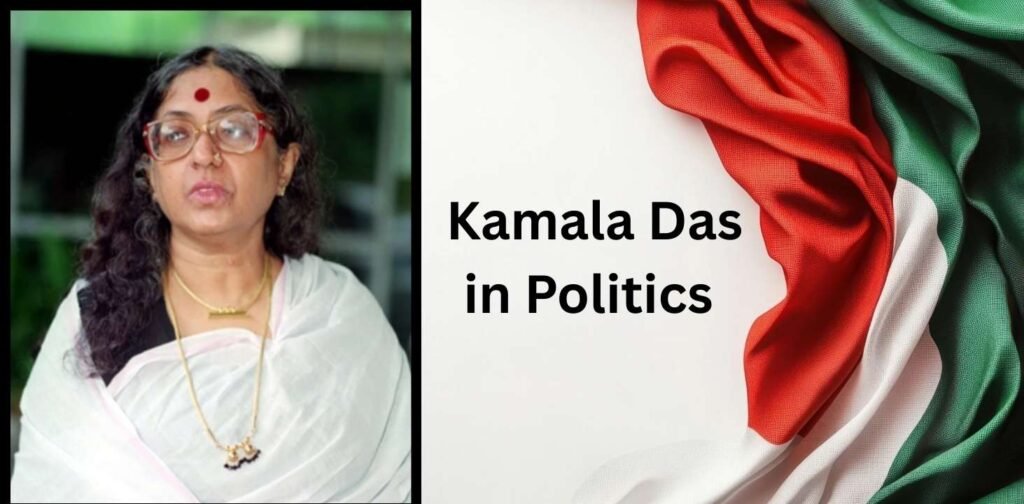
Kamala has never been active in politics before; she established a Lok Seva Party, which aims to promote secularism and give shelter to mothers who are orphaned. In the year 1984, she contested the election in the Indian Parliament from Thirvanthapuram Constituency and got only 1786 votes. She was not happy and took rest inher sister’s home at Anamalai Hills. There she wrote the 20 Anamalai Poems, and 11 were published by Sahitya Akademi.
Kamala Das Conversion to Islam
Kamala converted to Islam in 1999 to marry Sadiq Ali, who was a Isamic Scholar, at the age of 65, but later she never remarried. She came with the name Kamala Surraya. Kamala was born as a Hindu Nair and got married to the Menon family. Later, she wanted to convert back to Hinduism, but her son denied because the radicals might threaten her.
Awards and Recognitions: Kamala Das
| Year | Award / Recognition | Work |
| 1963 | PEN Asian Poetry Prize | For contribution to poetry |
| 1968 | Kerala Sahitya Akademi Award (Story) | Thanuppu |
| 1985 | Kendra Sahitya Akademi Award (English) | Collected Poems |
| 1988 | Kerala State Film Award for Best Story | For story writing |
| 1997 | Vayalar Award | Neermathalam Pootha Kalam |
| 1998 | Asian Poetry Prize | For a lifetime contribution to poetry |
| 2002 | Ezhuthachan Award | The highest literary honour in Kerala |
| 2006 | Honorary D.Litt | University of Calicut |
| 2006 | Muttathu Varkey Award | For literary excellence |
Legacy of Kamala Das
| Year | Legacy Contribution | Details |
| 2018 | Google Doodle Tribute | Celebrated her literary legacy and influence on global audiences |
| 2018 | Biopic – Aami | A film based on her life, directed by Kamal |
| 2000 | Film Adaptation – Mazha | Malayalam film based on her short story Nashtappetta Neelambari |
| 2013 | Anthology Film – Kadhaveedu | Included the adaptation of her short story Neypayasam |
| 2006 | Television Film – Neermaathalathinte Pookkal | Based on her story; won the Kerala State Award |
Kamala Das Death
Kamala died at the age of 75 on 31 May 2009 in a hospital in Pune. For a long time, she was suffering from Pneumonia. Her body was taken from her home state, Kerala, and was interred at Palayam Jama Masjid in Thiruvanthapuram with full respect.
Conclusion
Kamala Das was one of the strongest poets and writers. She was a voice for women’s emotions and feelings. Kamala was an explorer in contemporary Indian writing. Through her works, poems, and writings represented originality and truth to Indian English Literature. Her books and poems are still studied by students in schools, which makes her legacy unforgettable.
Refresh Date: January 22, 2026