







Synopsis:
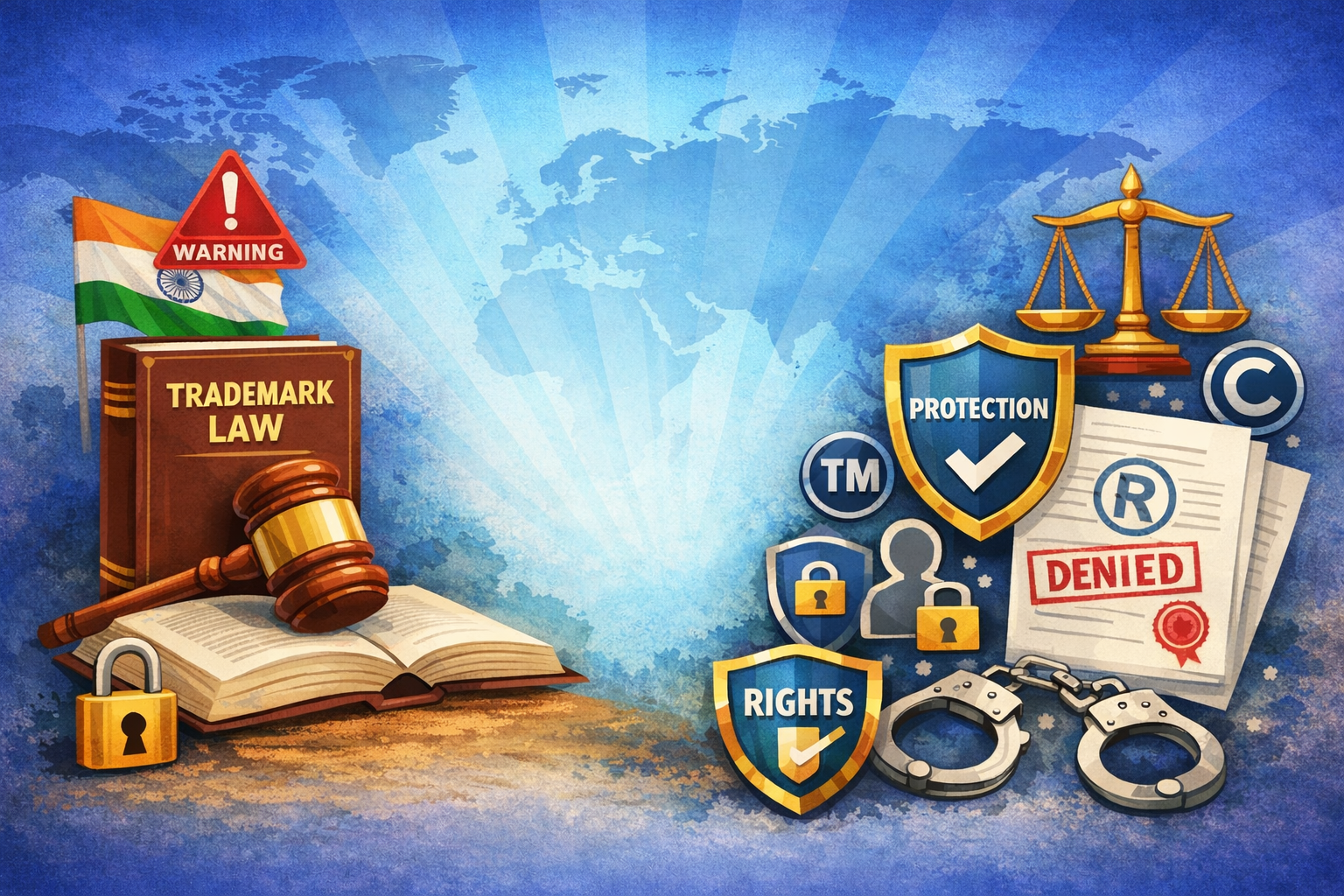
Registering a brand provides stronger legal protection. In this blog, you can learn about trademark law in India, the risks associated with not registering a trademark, and why you should register your brand.
Introduction
A brand name, logo, or symbol is the representation of the business identity. It assists customers in identifying the products and services provided by the company, which can be trusted over a period of time. Still, many businesses tend to ignore one of the most important aspects of protecting their business by not registering their trademark.
Trademark law, in India, offers legal protection to businesses for their registered trademark name through the trademark registration process. This offers them the right to use their trademark completely, which can be used for taking prison action against all people who infringe on their trademark.
In this blog, we will discuss trademark law in India, the legal implications of not registering an indicator, the prison rights of trademark owners, and the importance of registering the trademark at an early level for organizations.
Understanding Trademark Law in India
The Trade Marks Act of 1999 regulates the protection of trademarks in India. The act extends legal recognition to the trademark used for products and services, providing protection from unauthorized usage.
A trademark may symbolize different aspects that assist in the identification of the business in the market. It enables the identification of the source of products or services provided by the business.
Typical examples of trademarks may comprise names, logos, and taglines that the business uses to differentiate its products in the market.
The trademark may also extend to the names of products or the design of the package that makes the business distinct in the market.
The trademark system in India is regulated by the Controller General of Patents, Designs, and Trademarks.
Once the business has registered the trademark, it has the exclusive right to utilize the trademark for products or services provided by the business. The business operates at a limited level without the registration of the trademark.
What Happens If You Do Not Register a Brand
Failure to register a brand does not in itself mean that a brand is not protected. However, the level of protection afforded to a brand under the law is much less.
Common law is usually available to owners of unregistered trademarks. Common law is based on proof of prior use. While common law is available, enforcement is a long and drawn-out process.
Businesses that skip trademark registration may face several legal challenges, including:
- Difficulty proving brand ownership
- Limited rights to stop infringement
- Risk of another party registering the same mark
- Higher legal costs during disputes
These risks increase as the brand becomes more visible in the market.
Legal Risks of Not Registering a Trademark
1. Loss of Exclusive Rights
If the business does not register the brand, it does not qualify for legal ownership of the brand. This gives another party the right to register the trademark.
If the other party manages to register the trademark before the business, it gives them the right to have full control over the trademark.
2. Difficulty in Proving Ownership
In cases where the trademark has not been registered, the owner has to prove ownership by providing evidence of usage of the trademark.
This can prove to be a complicated task for the owner of the unregistered trademark.
3. Limited Legal Remedies
Registered trademark owners can file infringement suits directly under trademark law. However, owners of unregistered marks must rely on passing-off actions.
Passing-off cases require proof of reputation, misrepresentation, and damage, which can make litigation more difficult.
4. Risk of Brand Imitation
In the absence of a registered trademark, there is a risk that competitors might adopt a similar brand name or logo, leading to customer confusion and dilution of brand identity.
Once imitation takes root in the market, it is difficult to contain it.
5. Costly Rebranding
If another business registers a similar trademark first, the original brand owner may be forced to change their brand identity. Rebranding can involve significant financial and operational costs.
Companies might be forced to rebrand all their marketing materials, packaging, and advertising strategies.
Rights of a Registered Trademark Owner
Completing trademark registration provides several legal advantages.
Exclusive Use of the Trademark
The registered owner of the trademark has the exclusive right to make use of the trademark for the products or services for which the trademark was registered.
Legal Protection Against Infringement
Registered trademark owners have the right to sue for infringement in the event of unauthorized use of a similar trademark by another entity.
Right to Use the ® Symbol
Upon completion of the trademark registration process, the owner has the right to make use of the registered trademark symbol. This gives a warning to anyone who attempts to make unauthorized use of the trademark.
Licensing and Business Expansion
Once a trademark is registered, it can be licensed to other companies. It can also be used in a franchise or a partnership.
Business Asset Value
Trademarks are considered intangible assets that add value to a business enterprise. The value of a company is boosted by a strong collection of trademarks.
How Trademark Registration Strengthens Brand Protection
By completing the trademark registration, businesses can attain legal ownership of their brand identity. This becomes even more important as the business grows and expands to new markets.
Registration helps businesses:
- Prevent unauthorised use of their brand
- Protect customer recognition and trust
- Establish legal rights in case of disputes
- Strengthen brand reputation in the market
By registering their trademark, businesses can prevent conflicts from arising in the future when their brand becomes well recognized.
Steps to Register a Brand in India
The process to register a brand involves several stages.
Step 1: Trademark Search
Before filing an application, businesses should conduct a trademark search to ensure that the proposed mark is not already registered or pending registration.
Step 2: Filing the Application
After a decision to apply for a trademark has been made, an application is filed with information such as the trademark name, logo, class of goods or services, and other documents.
Step 3: Examination
The trademark office processes the application and carries out an examination to determine if there are any conflicts with existing trademarks or if it contravenes any laws.
Step 4: Publication in the Trademark Journal
After passing the examination stage, the trademark is published in a journal. This allows other parties to oppose it if they believe it affects their rights.
Step 5: Trademark Registration
If there are no opposing documents or if they are dismissed in favor of the applicant, a registration certificate is granted.
After registration, it is valid for ten years and can be renewed indefinitely.
When Should Businesses Register a Brand
Some businesses wait until their businesses are large before registering their trademarks. However, doing so earlier is more beneficial.
Businesses should register a brand:
- Before launching products or services
- Before launching marketing strategies
- Before expanding their business
- Before seeking investments
Taking action early helps ensure that the brand identity remains legally protected. Businesses may also seek online lawyer consultation to understand trademark requirements and complete the registration process correctly.
Importance of Trademark Protection for Growing Businesses
As businesses grow, their brand becomes more visible and recognised in the market. Increased recognition makes the brand more valuable but also more vulnerable to misuse or imitation by others.
Trademark registration helps protect the identity of a product or service. It ensures that competitors cannot use similar names, logos, or symbols that may confuse customers.
It also plays an important role in maintaining customer trust. When customers recognise a registered brand, they associate it with consistent quality and reliability.
Trademark protection safeguards marketing and branding investments made by a business over time. It prevents others from benefiting from the reputation built by the original brand owner.
A registered trademark helps protect these elements under the legal framework established by the Trade Marks Act, 1999, ensuring stronger legal rights for the brand owner.
Conclusion
Trademark law in India provides strong legal protection for businesses that register a brand through the trademark registration process. Registration grants exclusive rights, strengthens legal standing in disputes, and protects the brand from imitation.
Businesses that fail to complete trademark registration may face legal challenges such as limited rights, difficulty proving ownership, and potential rebranding costs. As brands grow and gain recognition, these risks become more significant.
Taking timely action to register a brand ensures that businesses can protect their identity, maintain customer trust, and secure long-term brand value.
Refresh Date: March 12, 2026