





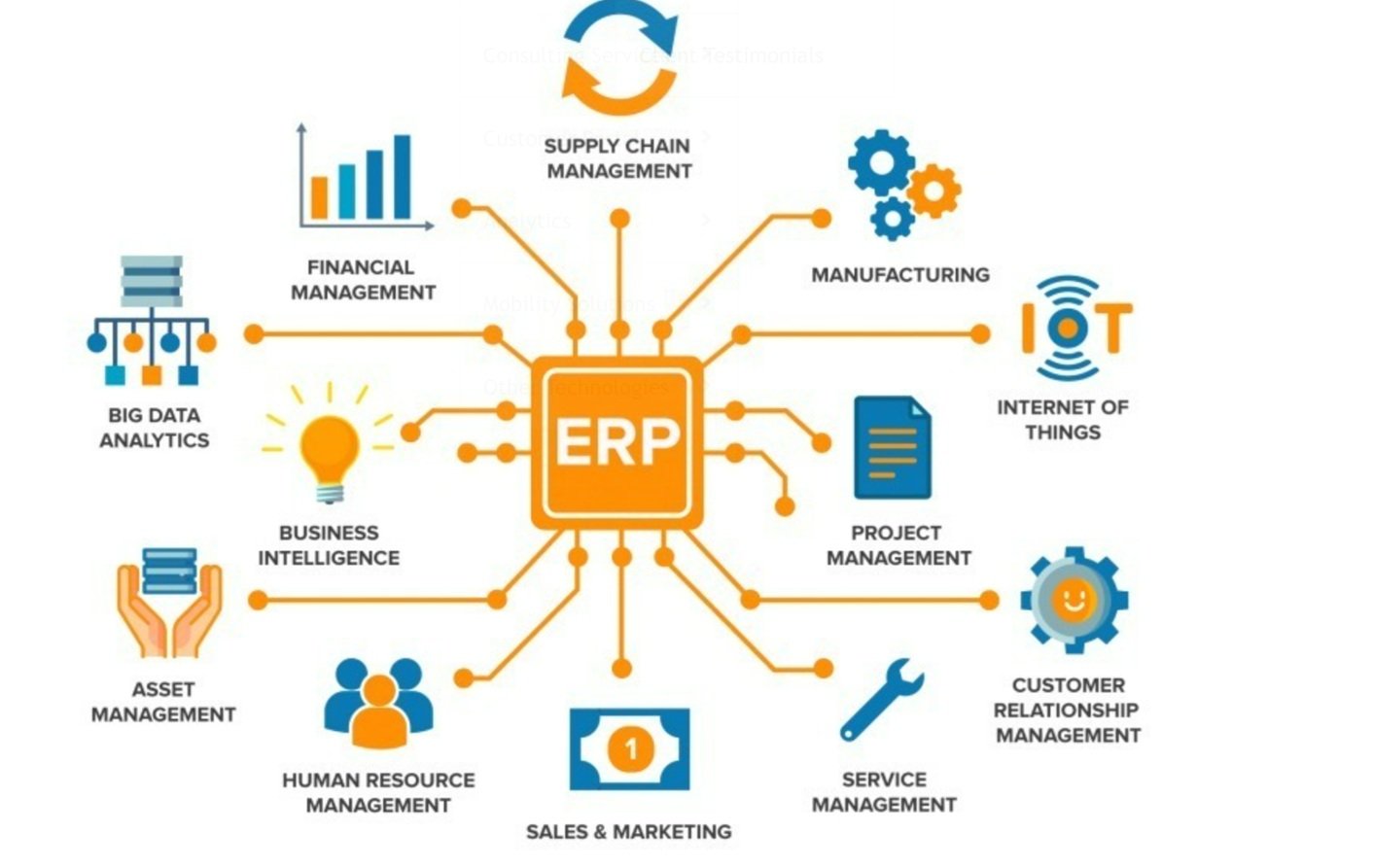
Enterprise resource planning systems are the foundation of an organization’s operations, handling everything from finances to inventory. These technologies’ automation turns laborious, manual procedures into efficient workflows that require little human involvement. Businesses may decrease errors, and speed up operations, along with freeing up staff members to concentrate on value-added jobs that call for creativity and critical thinking by automating repetitive chores. Organizations may optimize their ERP automation investments, and increase operational effectiveness, along with creating responsive systems that adjust to shifting market conditions and business demands by grasping basic automation ideas.
1. Transforming Order-to-Cash Cycles
From the first purchase to the last payment receipt, automated order processing transforms how companies manage client interactions. Without the need for human data entry, which can lead to mistakes as well as delays, sales orders are automatically generated from customer portals or integrated e-commerce systems. Instantaneous inventory availability checks verify product availability or initiate backorder alerts prior to customers completing transactions. Automated invoicing removes the delay between delivery in addition to billing by producing precise bills as soon as an order is fulfilled. Payment matching updates account balances and flags differences for further inquiry by automatically reconciling customer payments with pending bills.
2. Optimizing Procurement and Vendor Management
Automation of procurement is what streamlines purchasing activities and ensures that companies acquire the resources required for them at an adequate cost and maintains the relationship with suppliers intact. Without the need for human forwarding, automated requisition approvals route purchase requests through the proper authorization chains based on departmental budgets and spending thresholds. In order to avoid stockouts that interfere with production or sales, purchase orders are automatically generated when inventory levels drop below predefined reorder criteria. Vendor selection automation makes recommendations for the best purchases by assessing vendors based on quality indicators, cost, and delivery performance.
3. Accelerating Financial Closing Procedures
The amount of time finance teams spend finishing accounting periods and creating financial statements is significantly decreased by month-end and year-end closure automation. Recurring transactions such as allocations, accruals, and depreciation are posted by automated journal entries without the need for human computation or data entry every period. Instead of manually comparing thousands of records, reconciliation workflow automatically compare transactions across several accounts as well as systems, identifying exceptions that need further examination. Consolidation automation systematically removes intercompany transactions while combining financial data from business units, subsidiaries, along with legal organizations.
4. Enhancing Inventory and Warehouse Operations
Material movements, storage optimization, and fulfillment tasks that formerly required a great deal of manual coordination and physical labor are coordinated by warehouse automation. Purchase orders or production runs are initiated proactively by automated replenishment, which determines ideal stock levels based on lead times, safety stock requirements, and demand projections. Bin placement management maximizes space efficiency as well as reduces retrieval times during picking operations by guiding warehouse employees to the best storage locations. Without needing employees to manually arrange routes, pick-and-pack automation creates efficient picking routes that shorten trip times in addition to increase fulfillment speed.
5. Streamlining Production Planning Workflows
Manufacturing automation maximizes productivity while reducing waste and downtime by coordinating production processes across people, and equipment, as well as material resources. Demand forecasting automation makes proactive capacity planning possible by predicting future production needs by analyzing past sales trends along with market trends. Material requirements planning means that the resources will be available on demand without the need to bear unnecessary costs to carry inventory since it automatically computes the component requirements, based on the production schedules. Work order creation can automatically generate production instructions based on the customer orders or requirements of income replenishment without requiring human scheduling.
Conclusion
ERP automation is now a must for businesses looking to maintain their competitiveness in a rapidly evolving digital environment. Organizations can lower risk, increase accuracy, and achieve greater operational efficiency by automating key processes in the areas of finance, procurement, and inventory, along with manufacturing. Opkey is unique in this regard. Opkey, which was purpose-built with agentic AI, assists businesses in overcoming legacy complexity, and expediting ERP implementations, as well as guaranteeing that technological investments yield genuine return on investment. Opkey helps companies update with confidence and turn ERP systems into flexible, intelligent engines for long-term growth with quicker deployment times, and lower maintenance costs, as well as considerable reductions in manual labor.
Refresh Date: February 7, 2026