


Every JEE preparation begins with a practical decision—selecting the right books. This choice directly affects how concepts are understood, how problems are approached, and how consistently performance improves. With a highly competitive exam structure, superficial preparation does not hold. Depth, repetition, and pattern recognition matter.
Well-curated JEE entrance books do more than explain theory—they train problem-solving behaviour. Resources like Skills in Mathematics, PW’s year-wise papers, Coordinate Geometry by S.K. Goyal, and long-term PYQ collections provide structured exposure to real exam difficulty. The correct combination of these books creates a preparation system that is both efficient and exam aligned.
Why the Right JEE Entrance Books Matter
JEE Requires Conceptual Precision
Memorisation is insufficient. Books designed for JEE explain the reasoning behind formulas and problem-solving steps, which is essential for tackling unfamiliar questions.
Structured Problem Sets Improve Accuracy
Good books follow a progression—basic to advanced. This builds confidence while gradually increasing difficulty.
Real Exam Patterns Require Real Practice
PYQ-based books help identify:
- Repeated concepts
- Question trends
- Time-consuming traps
Essential JEE Entrance Books for Strong Foundations
Building a strong base for JEE starts with choosing the right study material that simplifies concepts and supports consistent practice. With access to a trusted online book store in India, students can easily find essential JEE entrance books that align with their preparation level and help strengthen core fundamentals from the ground up.
Skills in Mathematics Series (Amit M. Agarwal & Others)
- Covers algebra, calculus, coordinate geometry, graphs
- Strong conceptual clarity
- Advanced-level problem sets
Coordinate Geometry by S.K. Goyal (Arihant)
- Focus on conics, straight lines, loci
- Clear explanations
- High-weightage topic coverage
Skill in Mathematics – Algebra
- Focused on equations, inequalities, functions
- Strong question progression
- Improves calculation speed
Must-Have JEE Problem-Solving & Practice Books
PW JEE Main 6 Years (2019–2024) – Mathematics
- Chapter-wise PYQs
- Pattern-based preparation
- Identifies important topics
15 Years JEE Main Physics (Arihant Experts)
- Large PYQ collection
- Topic-wise categorisation
- Accurate solutions
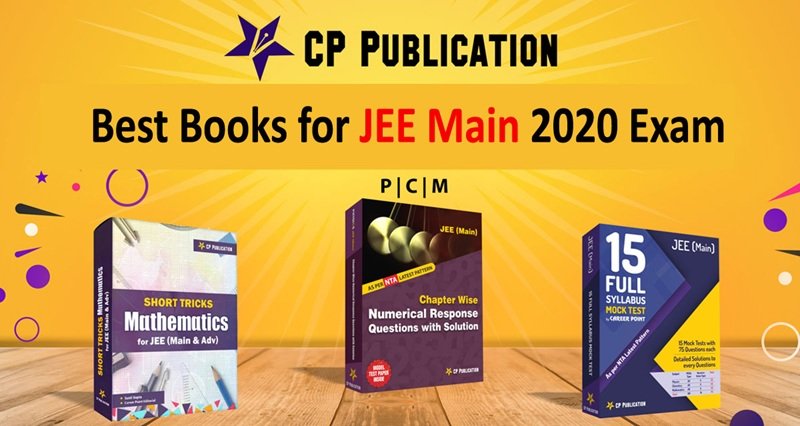
PCM Combo Practice Books (Mock Sets)
- Full-length tests
- Exam simulation
- Time management training
47 Years IIT-JEE Mathematics (Amit M. Agarwal)
- Advanced-level problems
- Multi-step solutions
- Essential for JEE Advanced
Exam Cracker Mathematics
- Shortcut-based solving
- Mixed difficulty
- Useful for revision phase
Discrete Mathematics for JEE (Piyush Rajani)
- Logical reasoning and combinatorics
- Strengthens analytical thinking
Books for Supplementary Strengthening
Motion Chemistry Handbook
- Concise theory
- Formula sheets and mechanisms
- Ideal for quick revision
Your Personal Teacher – Physics (Shashi Bhushan Tiwari)
- Simplifies difficult topics
- Step-by-step explanations
- Helpful for weak areas
NATA & JEE B.Arch Previous Year Papers
- Useful for architecture aspirants
- Improves visual reasoning
Chemical Sciences Solved Papers (NTA/CSIR)
- Enhances chemistry depth
- Useful for higher-level preparation
How to Choose Books Based on Preparation Stage
Class 11 (Foundation Phase)
- Skills in Mathematics
- Motion Chemistry
- Concept-focused physics books
Class 12 (Acceleration Phase)
- PW 6 Years PYQs
- 15-Year Physics
- Algebra + Coordinate Geometry
Final 4 Months (Intensive Phase)
- Exam Cracker Mathematics
- 47 Years IIT-JEE Maths
- Full-length mock tests
Smart Study Strategy Using These Books
Follow a 3-Step Cycle
- Concept learning
- Practice (PYQs)
- Analysis
Build a Mistake Log
Track repeated errors and revise them regularly.
Mix Difficulty Levels Daily
Include:
- Easy (confidence)
- Medium (consistency)
- Difficult (growth)
Also Read: Tamasha App Overview: Features and Benefits
Refresh Date: May 14, 2026