


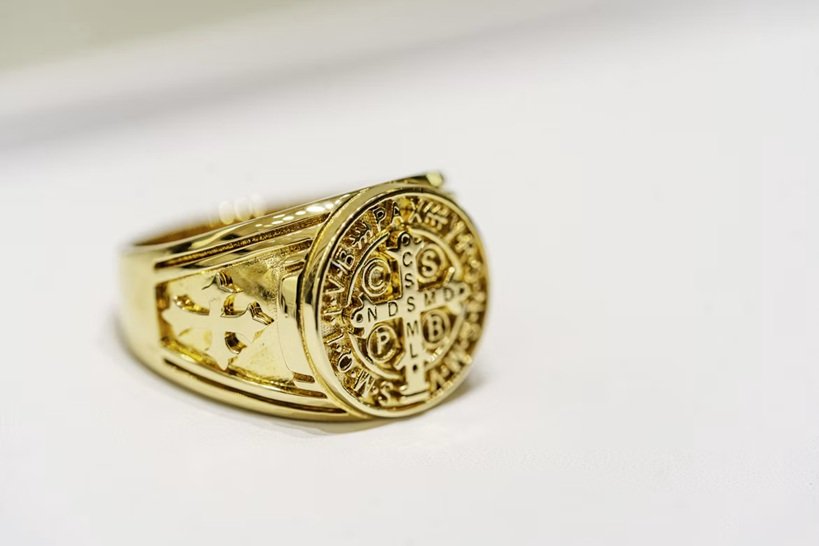
You take the same gold ring to two buyers on the same afternoon. One offers $650. The other says $780. Nothing about the ring has changed, and the gold market has barely moved, so where did the extra $130 come from? The difference usually comes down to how each buyer calculates what the piece is worth to their particular business.
Understanding that calculation is especially useful when comparing businesses offering cash for gold in Brampton or elsewhere. An offer is ultimately a purchase price, not an appraisal of what your jewellery originally cost or what a similar piece might sell for in a store. Buyers can use different testing methods, operating margins, resale channels, and assumptions about the amount of recoverable gold in your piece.
The Karat Stamp Is Only the Starting Point
Most gold jewellery carries a quality mark such as 10K, 14K, or 18K. Those numbers describe the proportion of gold, not the total weight of the item.
The Competition Bureau explains that Canadian precious-metal quality marks must meet specific standards and tolerances. For example, 14K gold may also be represented by a decimal quality designation of .583.
A buyer still needs to determine what is actually being purchased. Clasps, solder joints, springs, stones, inserts, and components made from other metals can affect the amount of payable gold. Repairs made during the jewellery’s lifetime can complicate the calculation.
That’s why two buyers who agree that your bracelet is 14K may not necessarily assign the same gold weight to it.
Testing Methods Can Produce Different Assessments
Buyers can also differ in how they verify purity. Depending on the item and the business, testing may involve acid testing, electronic equipment, X-ray fluorescence technology, or a combination of methods.
The important question for you is not which piece of equipment sounds most sophisticated. Ask what purity the buyer determined and what weight they are using in the calculation. A transparent buyer should be able to explain both without making the transaction feel like a black box.
Even a relatively small difference in estimated purity or payable weight becomes meaningful if you’re selling heavier jewellery.
Buyers Don’t All Have the Same Business Model
Even if two buyers calculate almost identical underlying gold values, their offers can still be different because they’re willing to pay different percentages of that value.
One buyer may primarily send jewellery to a refiner and price everything according to expected metal recovery. Another may have lower processing costs or sell certain items through additional channels. Operating expenses, refining arrangements, transaction volumes, and desired margins can all influence how much room a buyer has to increase an offer.
Compare the Calculation, Not Only the Final Number
Getting more than one offer can be useful, but the real advantage comes from understanding why the numbers differ.
Ask each buyer for the measured weight, tested karat or purity, deductions for stones or non-gold components, and the amount they are actually paying for the gold content. You can then compare two offers on the same basis.
Refresh Date: October 23, 2026