
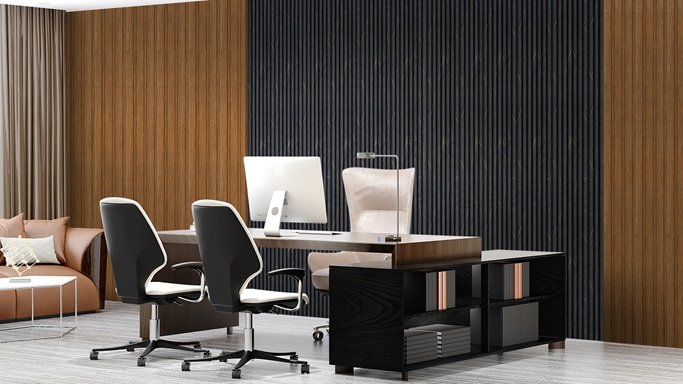
When you walk into a modern office or a large retail store, you might notice that the walls are no longer just flat surfaces painted in a single colour because there is a move toward adding depth and texture to make these areas feel more alive. It is quite common for commercial buildings to have large open spaces that can feel a bit cold or empty if not broken up with visual details that catch the light. One way designers solve this problem is by using slatted or ribbed surfaces that create a sense of movement along a hallway or behind a reception desk. These choices are not just for show; they also help hide the wear and tear that happens when hundreds of people pass through a building every single day.
Smart Ways To Divide A Room Without Building Walls
In a busy workplace, it is often necessary to create separate zones for meetings or focused work, but nobody wants to feel trapped in a small, windowless box. Using louvers panels is a practical way to create a boundary that still lets air move and allows some light to pass through, keeping the space feeling open and airy. When a company wants to separate a break room from the main office floor without losing the social connection between the two areas. The vertical lines of these surfaces can actually make a ceiling look much higher than it really is, which is a nice trick for basement offices or low-ceiling retail shops.
When you look at options from brands like Advance Laminates, it is easy to see how these materials work well in high-traffic areas because they are tough and do not show scratches as easily as a smooth painted wall might. If you are looking for a modern finish for a hotel lobby or a restaurant, then choosing a material that stays looking new for years is a much better plan than picking something fragile. It is a realistic observation that a wall in a public place will eventually be bumped by a suitcase or a cleaning cart, so having a textured surface that hides those little marks saves a lot of money on repairs. These panels can wrap around a structural pillar or a curved counter, turning a boring necessity into a design feature people actually enjoy looking at.
Managing The Environment And The Mood Of A Business
The way a room sounds is a huge part of the customer experience, and if a cafe or shop is too noisy, people may want to leave sooner than they planned. Hard surfaces like glass and tile reflect sound in a way that can be very distracting, but a wall with ridges or slats can help break up those echoes, making the room feel a bit quieter and more private. This simple logic applies to boardrooms, too, where you want the person at the far end of the table to hear you clearly without the sound of your voice bouncing off the back wall. It is interesting to see how a design choice that looks like it is just for style can actually make the room much more functional for the people who use it every day.
Choosing a wood grain or charcoal finish for these areas can shift the mood from a high-energy sales floor to a calm, focused studio, depending on the colour you pick. Light wood tones tend to make people feel more relaxed and welcome, while darker shades can give a sense of authority and strength to a lawyer’s office or a bank. There is a small repetition in how these lines follow each other across a wall, creating a rhythm that feels very stable and orderly, which is exactly what many businesses want to project to their clients. It is about more than just picking a color because the shadow and the light that fall between the slats add a layer of sophistication that a flat sheet of material just cannot provide.
Finding the right balance between a stylish look and a material that can withstand heavy use is the main goal for anyone who manages a commercial property. Taking the time to see how the patterns look in the morning and evening light can help you pick the right shade for your specific location.
Also Read: Aviator and the Strange Pull of a Very Simple Game
Refresh Date: June 2, 2026