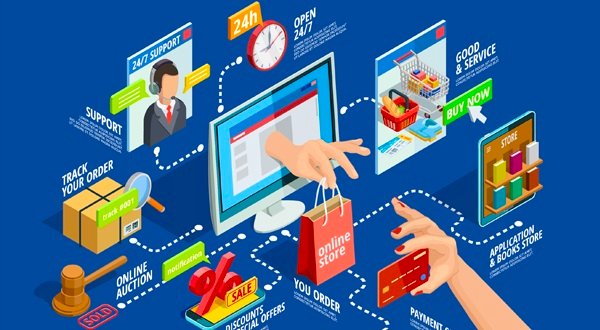

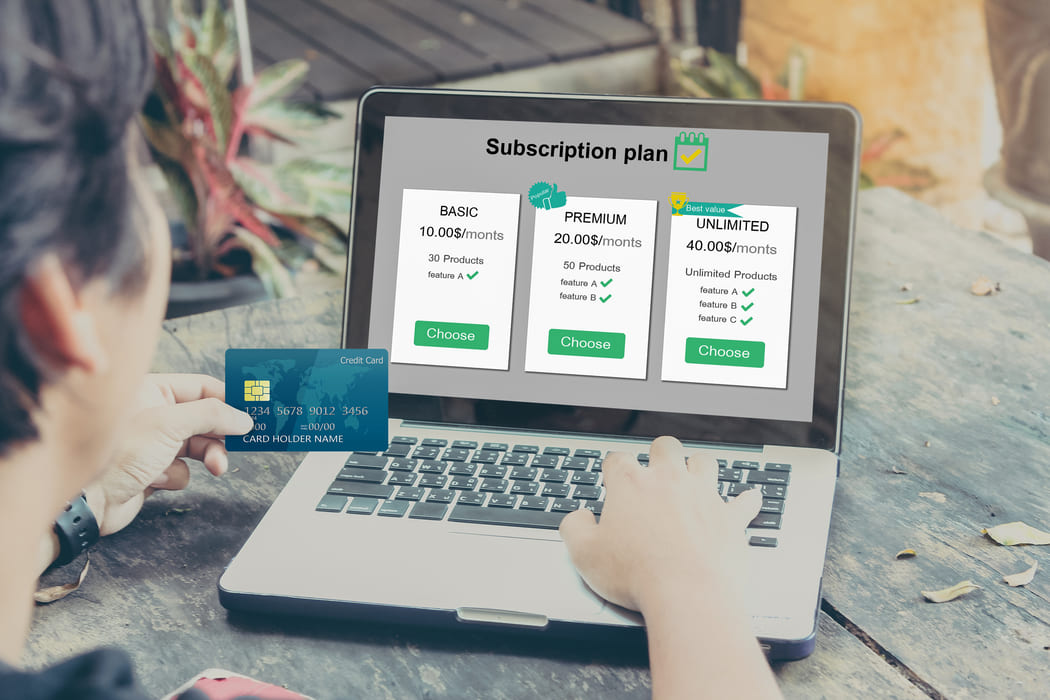
For quite a long time, the way commerce and sales have operated has been quite simple. You offer a particular good – whether that be barley, silk, or a horse – or a service like shoe shining, protection, or shipping, and for this you’d receive a particular fixed fee. In exchange, you’d get paid in the national currency. In the past, it would’ve been completely unmanageable to just have a customer come to you every month to pay for the benefit that they’re getting. It would become too difficult to have to track them all.
Nowadays, a bank card can get charged a variable amount every month, and this amount can vary by the degree of quality or service that they need. Things are quite a lot more flexible and favorable for both the customer and the business. For that reason, a growing number of companies have been abandoning the old practice of a fixed one-time sale in favor of recurring subscription models that generate revenue month after month.
This fundamental way in which value is delivered and captured can be seen in countless industries, with movie streaming, subscription-based software, and even physical products ranging from meal kits to personal care items.
Why Customers Are Embracing Subscriptions
Netflix was one of the most popular cases of popularizing the subscription model. It would simply get too clunky and add up to a huge bill if people had to rent every single film they watched. They got the benefit of being able to watch an unlimited amount of movies – an awesome bang for their buck. On Netflix’s part, it didn’t have to face the issue of people either spending on just the lone movie for a minimal fee and incentivizing them to spend more.
The same principle can be found across many digital services today. Companies lower the initial commitment required from customers and make it easier to get started. For example, Odd96 Casino offers no-deposit bonuses and loyalty cashback, allowing users to engage with the platform before making a significant financial commitment.
Low Barrier to Entry
Another big benefit customers get though, suppose they’re buying a piece of software like an Antivirus, is that previously buying a program often required making a sizable payment upfront, before they ever got to start using it. So a person had to actually save up, which hindered the possibility to actually buy.
Previously, people had to buy a whole album to listen to music. Now apps like Spotify offer access to countless tunes for a small amount, a la Netflix. This accessibility expands the potential customer base. Companies can thus attract a much broader range of customers by spreading out costs over time.
Staying Updated
One problem customers had to deal with before was that they might buy a program, but with the advances in technology going on, it could go obsolete or get thoroughly outperformed quickly. Take, for instance, a translation program like Trados in 2017. Whatever flaws the program suffered from – bugs preventing the files from properly saving, noticing errors, and poor machine translation – were never improved on in the program they owned, despite having paid several hundred dollars for it. Trados has since started to offer subscription.
A few years later, other users would be enjoying much more efficient features to get the job done quicker, just because they happened to buy it when a later release was out. Those who wanted the new fixes and fancy features had to pay up for the new versions to get them. The same situation has existed in many such fields.
Flexibility
By contrast, subscription plans typically include free updating, security patching, and customer care. On top of that, some businesses are highly seasonal. Some may get their needs covered already in one month and may not need the same service volume the next month. Subscription plans provide the flexibility to move down to a lower package later or start small and scale up later once they’ve really gotten to test out the service.
Technology allows access rather than necessitating full ownership, and delivery is continuous, not completed at a finite point in time. Whether payments are processed monthly, quarterly, or annually, the entire process can take place in the background with minimal human involvement.
Stability
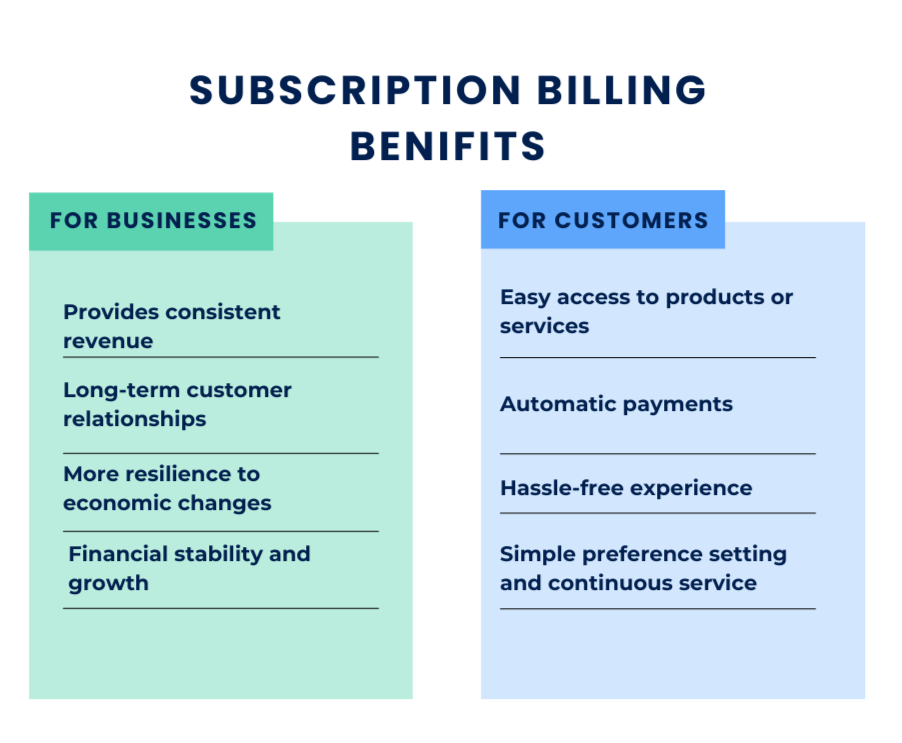
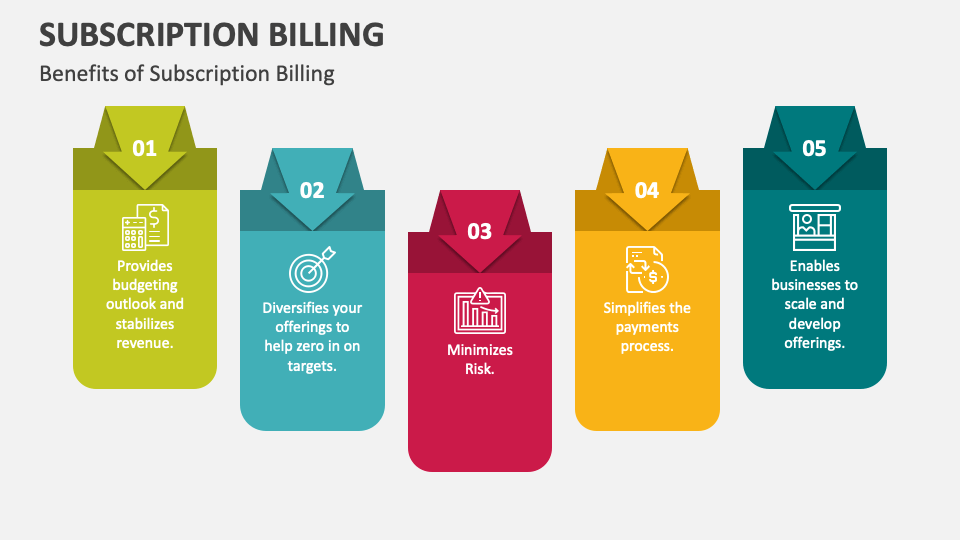
One of the problems businesses know all too well is inconsistency in the revenue they’re getting. Being able to properly track revenue is what allows them to plan out their expenditures in a proportional fashion to maximize the benefit. Instead of having potential months where companies have zero money to work with, they have exactly the stability they need to plan long-term strategy and keep afloat. Investors absolutely love this billing model too, as the risk associated with it is clearly lower.
This means peace of mind in:
- Scaling operations up or down
- Deciding whether to expand into additional markets
- Risk management
- Product development & research
- Seasonal fluctuations
- Surprises on the market
- Hiring
- Inventory management
Greater Revenue per Customer
Previously, customers and vendors stopped interacting as soon as the exchange was done. There was little reason for them to continue to interact. In the case of subscription, they stay with them for the foreseeable future. The goal becomes to keep the customer and prevent churn, and do so by continuing to deliver value. In the process, they gain an incredible amount of information from customers, which is used to increase their satisfaction.
They study what about the product or service drives customers’ interest the most and which creates the greatest displeasure so these things can be improved upon. From that point, they can give customized offers to customers, including bonuses and discounts, which can be calculated and optimized based on their past spending habits according to their user profiles. This all, in turn, increases their loyalty and the LTV derived from them.
Pricing Tiers
Instead of the potential revenue to be made from a particular user stopping as soon as they buy, companies have the opportunity to make even more by offering higher packages that are even more star-studded with newly added features. Meanwhile, there is already a relationship built, so these are the easiest sources of new revenue. Plus, the information preserved on these customers can be used to identify good candidates to buy affiliate services from other projects.
Automated Billing & Invoicing
Many businesses exist that require a sizable team of employees who have to be paid to process payments, at times commit errors in billing, and tie up the staff from being free to focus on doing what really matters to boost the business’s performance. Subscription platforms, meanwhile, can serve an unlimited number of customers with almost no extra cost at all. Invoices, analytics, and special offers can all be sent out automatically.
Challenges of the Subscription Model
Despite the many advantages that subscription businesses enjoy, recurring revenue doesn’t mean it is guaranteed. Businesses have to continually work to retain customers and justify the ongoing expense, while customers face a growing number of monthly payments competing for space in their budgets.
Some customers get subscription fatigue. This may be coming from, in part:
- Software applications
- Cloud storages
- Fitness memberships
- News outlets
- Gaming platforms
Subscription businesses depend on customers remaining subscribed over long periods. So they don’t want customers to become satisfied, find a cheaper option, or stop using the service. They can often quite easily cancel. Failed payment processing is another issue.
That said, this continuous investment in value provides substantially greater value to customers, and continuous innovation helps spark services to come up with ever better benefits for them to generate revenue from.
Also Read: 7 Tiny Details That Make Bathrooms Look Years Younger
Refresh Date: June 30, 2026